Cage & Enclosure Size Guide
The single most useful table we can give you: the minimum enclosure size for each small pet, why the number is what it is, and where to go deeper. Treat every figure as a floor, not a target — with housing, bigger is always better.
| Animal | Minimum enclosure | The rule behind it | Guide |
|---|---|---|---|
| Chinchilla (one) | 90 × 60 × 120 cm (3 × 2 × 4 ft), multi-level | Height to climb and leap; keep the room 15–21 °C. | Chinchilla cages |
| Syrian hamster (always solo) | ≥ 100 × 50 cm (~775 sq in) unbroken floor | Continuous floor to roam; 15–30 cm of bedding to burrow. | Syrian guide |
| Dwarf hamster | ≥ 100 × 50 cm unbroken floor | Same footprint as a Syrian — small body, same need to roam and dig. | Hamster cages |
| Guinea pigs (a pair) | ≥ 1.0 m² (10.5 sq ft); ~0.7 m² for one | Herd animals — keep two, on one open ground-level floor. | Guinea pig cages |
| Rabbits (a bonded pair) | ≥ 3 m² (32 sq ft) housing + exercise combined | Room for three consecutive hops and to stand fully upright. | Rabbit cages |
How to read these numbers
“Unbroken floor space” beats levels
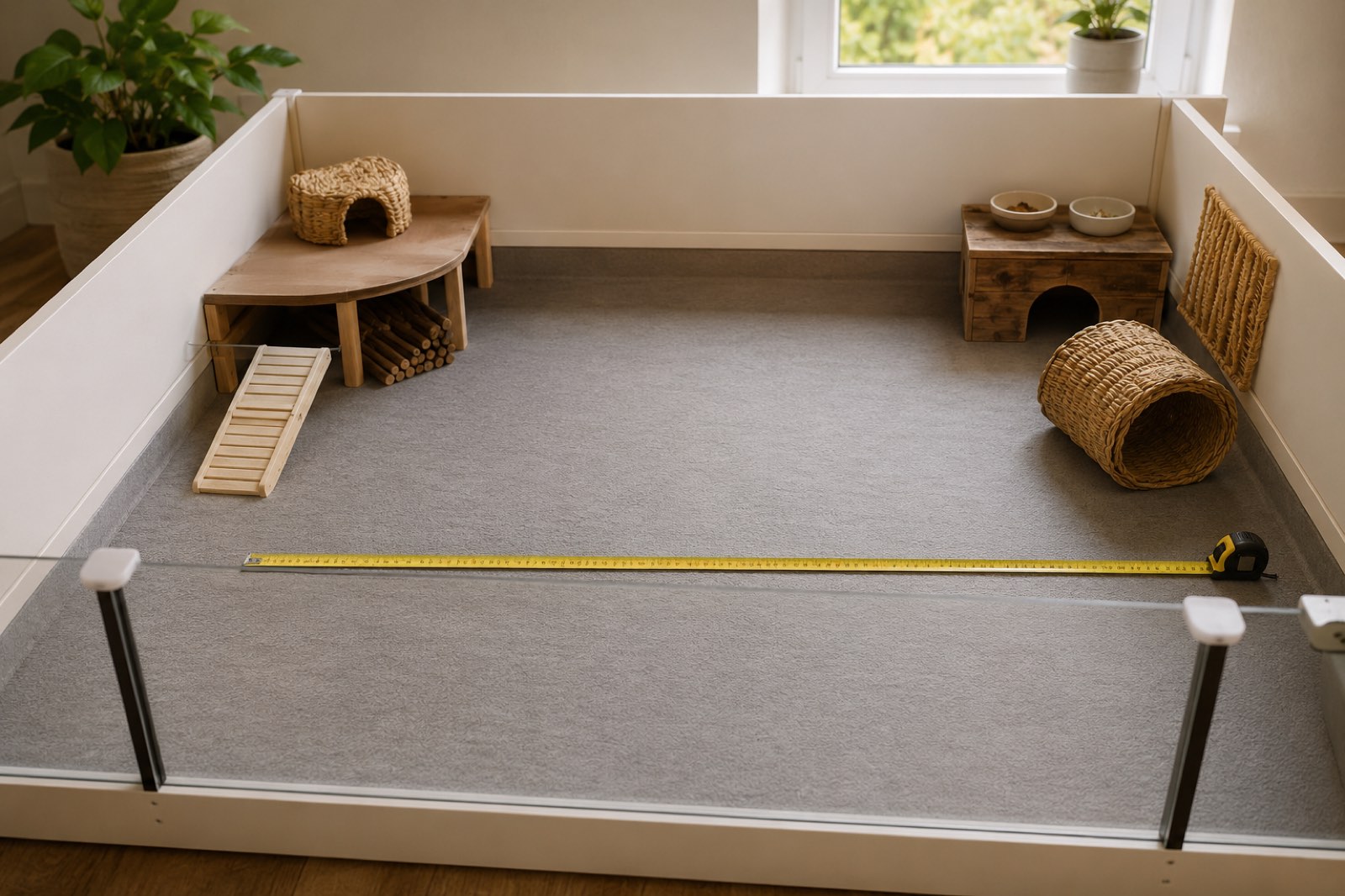
For ground-dwellers like hamsters and guinea pigs, a single large open footprint is worth far more than a stack of small shelves. A cage advertised as “huge” because it has three tiny platforms usually isn't. Measure the continuous floor.
Height is its own kind of space
Climbers — chinchillas especially — use vertical room the way a runner uses a track. For them, tall with staggered ledges is the goal. For everyone else, prioritise floor.
Bigger is better, always
Every number here is a minimum backed by welfare guidance, not an ideal. If you can give more, give more. No one has ever regretted a too-large enclosure.
Not sure which animal's home to fix first?
Head back to the housing hub for the full set, or jump straight to chinchilla cages — our most detailed enclosure guide.