Hamster Cages & Housing
Most hamster cages sold in shops are too small — often dramatically so. Housing a hamster well comes down to two numbers everyone underestimates: floor space and bedding depth.
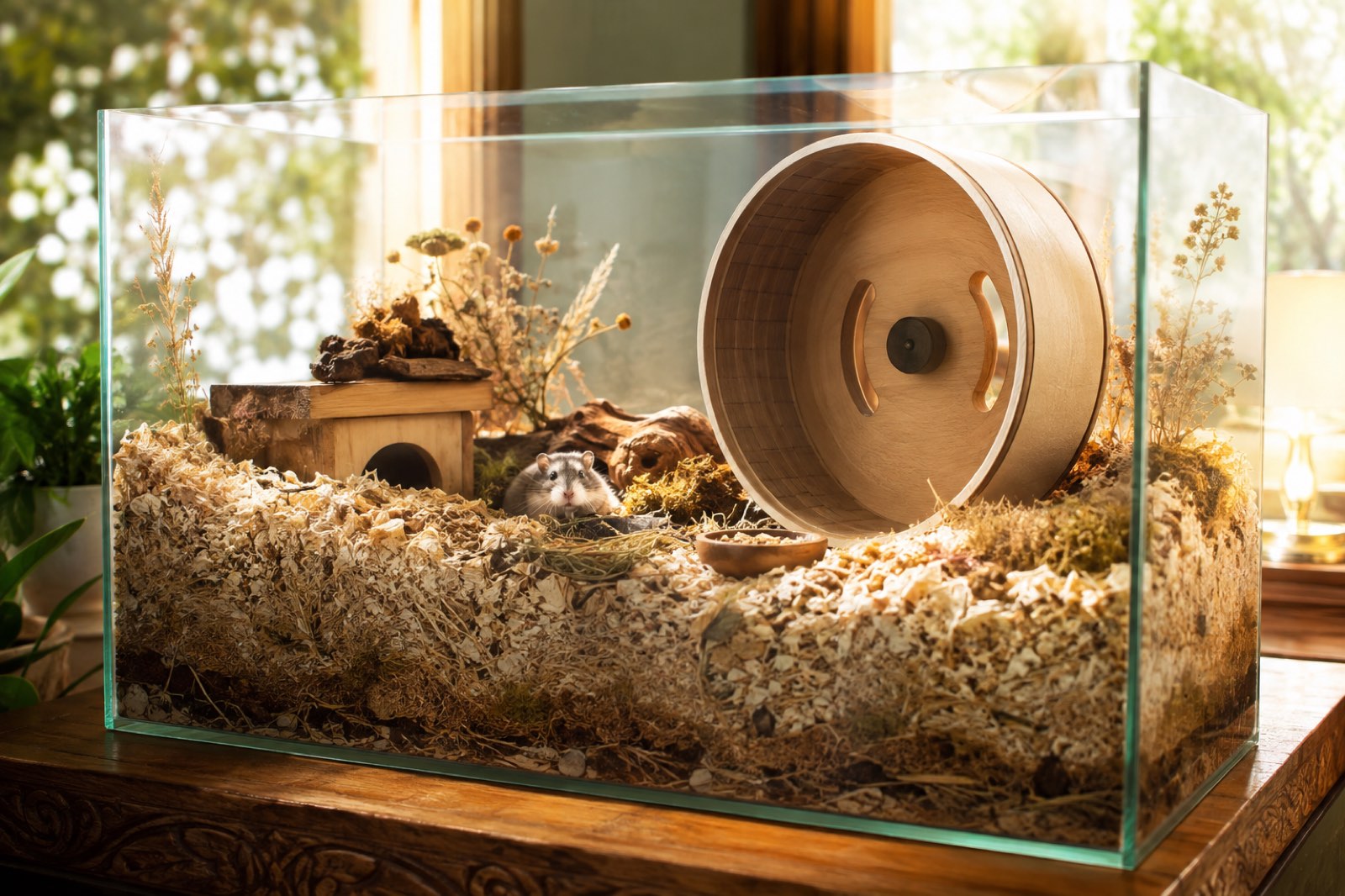
Floor space, not shelves
Aim for at least 100 × 50 cm (roughly 775 sq in) of continuous, unbroken floor for any hamster, Syrian or dwarf. A single open footprint lets a hamster run and forage the way it's wired to; a cage that hits the number only by counting narrow shelves doesn't really count.
Deep bedding for burrowing
Burrowing is a core need, not a nicety. Give 15–30 cm of dust-extracted substrate — paper-based, aspen, or kiln-dried softwood, with a little hay or plain tissue mixed in so tunnels hold their shape. Skip fluffy “cotton wool” nesting fibre and anything cedar-scented.
The rest of the spec
| What | The number |
|---|---|
| Wheel | Solid surface, ≥ 28 cm for a Syrian; a flat back means no spinal strain. |
| Bar spacing (if barred) | ≤ 1 cm — hamsters escape through surprising gaps. |
| Floor | Solid, always — never wire underfoot. |
| Good cage types | Large glass/PVC tanks, purpose-built rodent enclosures, DIY bin cages. |
One hamster, one home.
Syrians are strictly solitary and need the full care picture too — diet, handling, health, and setup. Read the complete Syrian hamster care & housing guide, and check the cage size guide for every species at a glance.