Chinchilla Cages & Enclosures
A good chinchilla cage isn't a cage so much as a home. Chinchillas are athletic, curious, and surprisingly particular about their space — so let's get the housing right, from floor plan to jump height.
Why chinchilla housing is different
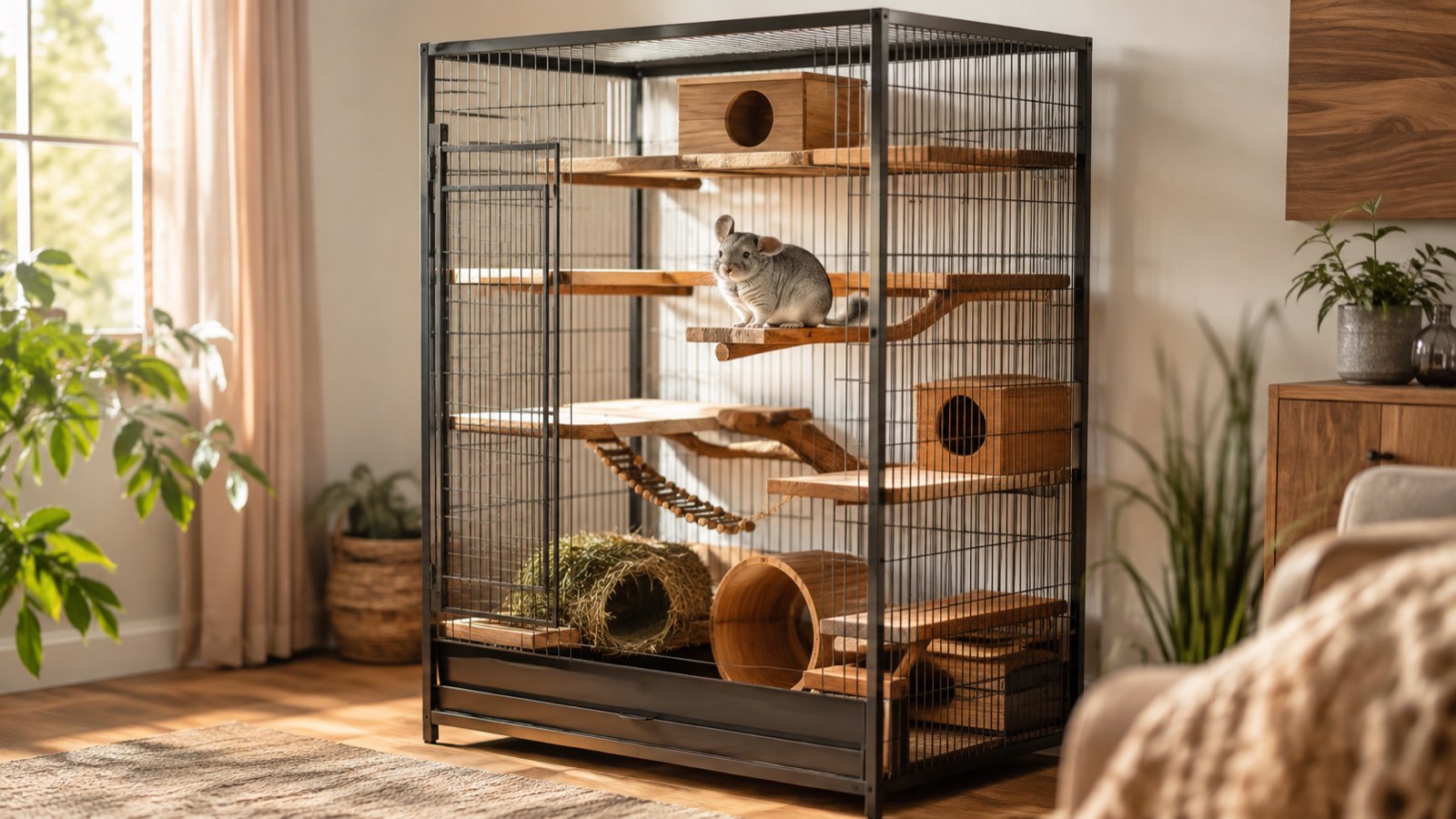
Two things set a chinchilla apart from every other small pet when it comes to housing: they climb, and they overheat. A chinchilla wants vertical space to leap between ledges, and it wants cool, moving air — its dense fur (the densest of any land mammal) is wonderful in the Andes and dangerous in a warm room. Get height and temperature right and you've solved most of the puzzle.
Minimum cage size
For a single chinchilla, aim for at least 90 × 60 × 120 cm (about 3 × 2 × 4 ft), with multiple solid levels — and, as ever, bigger is better. Height is doing real work here: a tall enclosure with ledges at varying heights lets a chinchilla do what it's built to do. A wide, short cage, however roomy on paper, wastes the animal's best trick.
| What | The number | Why |
|---|---|---|
| Enclosure (one chinchilla) | ≥ 90 × 60 × 120 cm (3 × 2 × 4 ft) | Vertical room to jump and climb between levels. |
| Levels / ledges | Multiple, solid, staggered heights | Encourages natural leaping; solid wood or metal saves the feet. |
| Bar spacing | ≤ 1.5 cm (smaller for kits) | Prevents escapes and trapped heads. |
| Floor & shelves | Solid — never wire mesh underfoot | Wire flooring causes sore hocks (bumblefoot). |
| Room temperature | 15–21 °C (60–70 °F); never above ~25 °C | Chinchillas overheat easily; heat + humidity risks heatstroke. |
Placement: cool, calm, out of the sun
Where you put the enclosure matters almost as much as the enclosure itself. Pick the coolest, most stable room you have; keep it out of direct sunlight and away from radiators and afternoon-hot windows; make sure air actually moves around it. In warm and humid climates a chinchilla room really does need air-conditioning during the hottest months — this isn't pampering, it's basic safety for an animal wearing the thickest coat in the animal kingdom.
Furnishing the enclosure
- Ledges & platforms: solid kiln-dried pine or metal, staggered so the chinchilla can hop up in stages.
- Hide house: a solid wooden house for sleeping and hiding — every good home needs a bedroom.
- Wheel: a large, solid-surface wheel (38 cm / 15 in or more) with no rungs or gaps that could catch a foot or tail.
- Dust bath: offered a few times a week in special chinchilla dust (not sand). Leave it in for 10–20 minutes rather than permanently, which keeps the coat pristine without irritating the eyes.
- Chews & hay: a constant supply of safe wood chews and a full hay rack — good for the teeth and the gut alike.
- Bedding: kiln-dried pine or paper-based bedding, or fleece liners; never cedar.
The acrylic enclosure option
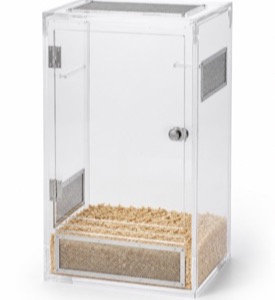
Solid-panel acrylic enclosures have become a popular alternative to traditional barred cages — they contain the mess a chinchilla cheerfully kicks out, cut down on draughts, and show the animal off beautifully. The trade-off is ventilation: acrylic needs generous mesh panels or vents so air keeps moving and heat doesn't build up. For a chinchilla, airflow is not optional, so choose a design that's built for a heat-sensitive climber, not a sealed display box.
Housing another small pet?
The house-first approach applies across the board. See the Syrian hamster housing guide, and watch for our cage size guide (coming soon) — every species' minimum enclosure in one table.