The Syrian Hamster, Properly Housed
Syrians are the big, bold, gloriously grumpy landlords of the hamster world — one to a home, thank you very much. They're also one of the most consistently under-housed pets in the shop. Let's fix that, starting with the enclosure and working out.
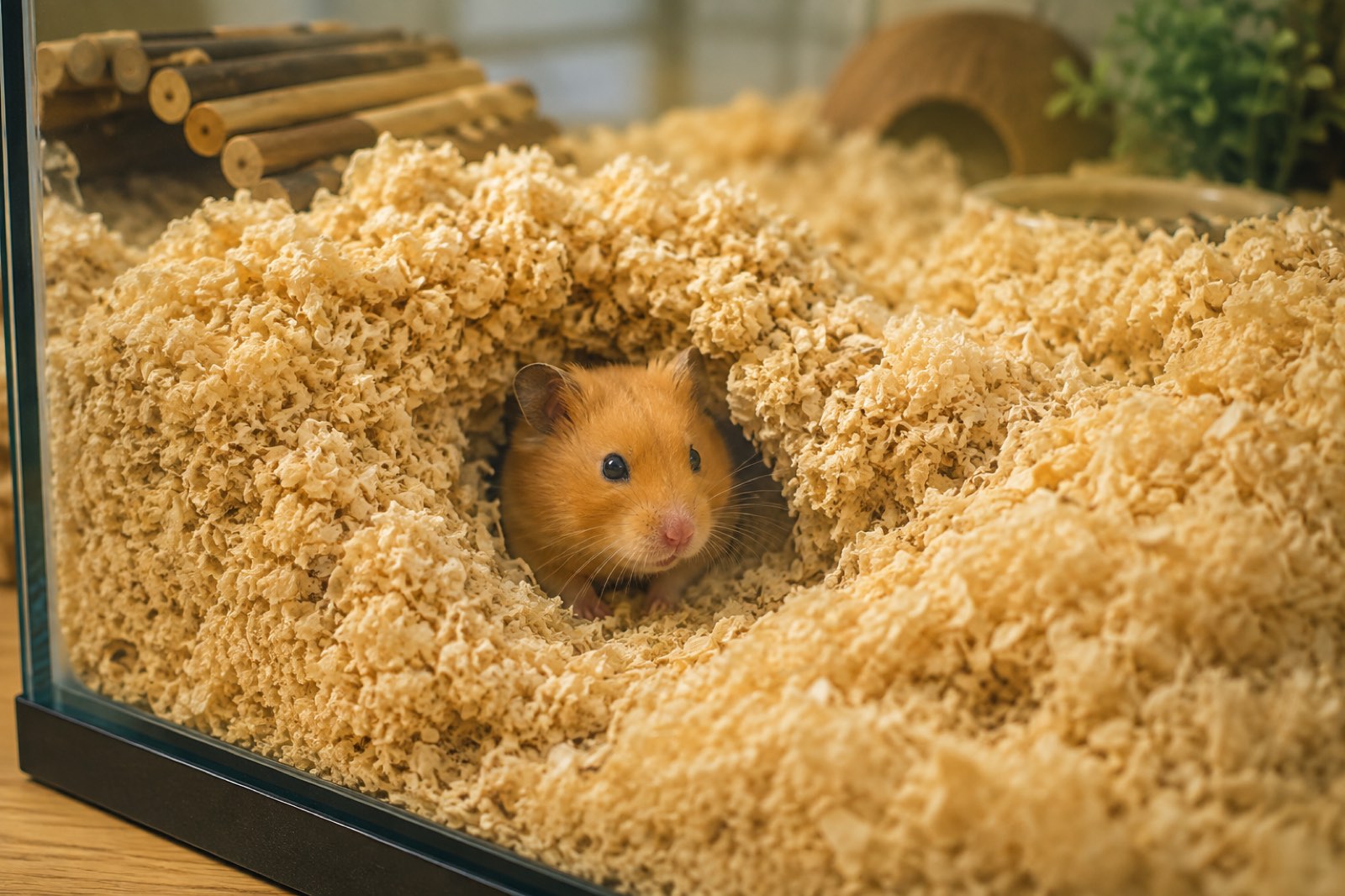
Meet the tenant
The Syrian (Mesocricetus auratus), also called the golden or teddy-bear hamster, is the largest of the common pet hamsters — usually 13–18 cm nose to tail. They're strictly solitary: in the wild they live alone and defend a territory, and in captivity two Syrians sharing a cage will eventually fight, often fatally. One hamster, one home. This is the single most important rule and it's non-negotiable.
They're crepuscular-to-nocturnal, so most of the action happens at dusk and through the night. A Syrian that's sleeping all day isn't bored — it's on schedule. Plan handling for the evening, when they're naturally awake.
Housing: the part everyone gets wrong
Here's the uncomfortable truth about most hamster cages sold in pet shops: they're too small. A Syrian needs room to run, and — just as importantly — depth to burrow. Burrowing isn't a cute bonus behaviour; it's a core need. A well-housed Syrian spends its night digging tunnels, foraging, and running, and it can only do that in an enclosure built for it.
Minimum enclosure size
Aim for at least 100 × 50 cm (roughly 775 sq in) of continuous, unbroken floor space — and treat that as a floor, not a target. Bigger is always better, and "continuous" matters: a single large open footprint beats a multi-level cage where the "space" is really a stack of small shelves. Good options include large glass or PVC tanks, purpose-built rodent enclosures, and DIY bin cages.
| What | The number | Why |
|---|---|---|
| Floor space | ≥ 100 × 50 cm (~775 sq in), unbroken | Room to run and forage; Syrians roam widely at night. |
| Bedding depth | ≥ 15 cm (6 in), ideally 20–30 cm | Deep enough to dig real, self-supporting burrows. |
| Wheel diameter | ≥ 28 cm (11 in), solid surface | A too-small wheel arches the back and causes long-term spinal strain. |
| Bar spacing | ≤ 1 cm (if barred) | Syrians are escape artists and can squeeze through surprising gaps. |
| Floor type | Solid — never wire | Wire floors cause sore hocks (bumblefoot) and trapped-limb injuries. |
Bedding & substrate
Use a deep, burrow-friendly substrate: paper-based bedding, aspen, or kiln-dried, dust-extracted softwood shavings. A handful of plain toilet paper or hay mixed in helps tunnels hold their shape. Avoid fluffy "cotton wool" nesting fibre (it wraps around limbs and causes impaction if eaten) and any scented or cedar shavings (the oils irritate the airways). Add a small sand bath in one corner — Syrians groom by rolling in sand, and it keeps their coat in good order.
The furniture
- Wheel: large, solid-surface, one that lets the hamster run with a flat back.
- Hides: at least one multi-chamber hide or a deep enough substrate to build a nest; a Syrian likes a bedroom separate from the pantry.
- Chews & forage: untreated wood, seagrass, scatter-fed food to encourage natural foraging rather than a full bowl in one spot.
- Water: a bottle or a shallow, tip-proof bowl; check it flows every day.
Diet
A good-quality hamster mix (a balance of grains, seeds, and a little protein) forms the base. Supplement with small amounts of fresh vegetables — a little cucumber, carrot, broccoli, or dandelion greens — and the occasional protein hit like a mealworm or a bit of plain cooked egg. Keep sugary fruit and shop treats rare. And don't panic when your hamster empties the bowl into its cheeks and vanishes: pouch-hoarding food into the burrow is exactly what it's supposed to do.
Handling & temperament
Syrians tame up beautifully, but on their own schedule. Let a new hamster settle for a few days before reaching in, always work in the evening when it's naturally awake, and never wake a sleeping hamster by hand — a startled Syrian nips, and who could blame it. Build trust with a hand resting flat in the enclosure, then hand-fed treats, then short scoop-ups close to a soft surface. Most become genuinely friendly with a couple of weeks of patience.
Health basics
Syrians typically live 2–3 years. Watch for wet tail (diarrhoea, especially in young or stressed hamsters — a genuine emergency), overgrown teeth, and lumps or skin changes in older animals. A big, enriched enclosure does more for daily health than almost anything else: an under-housed hamster that bar-chews and paces is telling you something's wrong with the home, not the hamster.
Your setup checklist
- ☐ Enclosure with ≥ 100 × 50 cm unbroken floor space
- ☐ 15–30 cm of burrow-friendly, dust-extracted substrate
- ☐ Solid-surface wheel, ≥ 28 cm
- ☐ Sand bath, multi-chamber hide, chews
- ☐ Water bottle/bowl checked daily
- ☐ One hamster — and only one
The same principle scales up.
Chinchillas need the same "house-first" thinking, just taller and cooler. See our chinchilla cage & enclosure guide for the full spec — and our cage size guide (coming soon) for every species in one table.